Introduction
Food fortification is positioned as a strategic element in transforming the food system into one that is sustainable, healthy, and resilient, grounded in local resources and wisdom, as mandated by the National Long-Term Development Plan (RPJPN) 2025–2045. This commitment is further reinforced in the National Medium-Term Development Plan (RPJMN) 2025–2029 , which places food fortification and biofortification as key components of nutrition interventions in human development. In line with this, food fortification is also included in National Priority 2 under the RPJMN 2025–2029's Main Priority Activities. At the implementation level, Indonesia has progressively adopted mandatory food fortification policies, including iodized salt since 1994 (SNI 3556-2024), wheat flour since 2001 (SNI 3751-2018), and palm cooking oil since 2019 (SNI 7709-2019). Despite a relatively strong regulatory framework, scientific documentation of the achievements and impacts of Large-Scale Food Fortification (LSFF) programs in Indonesia remains limited and insufficiently integrated. [2].
Data Gaps and Industry Compliance
This condition is reflected in the fragmented availability of food fortification data across sectors, with variations in format, indicators, and methodologies. This fragmentation complicates efforts to construct a comprehensive picture of program implementation and its contribution to improving population nutritional status. Data gaps are also evident in coverage, quality, timeliness, and integration across the national and subnational levels. The presence of outdated data further undermines its ability to reflect actual field conditions.
At the same time, governance of food fortification in Indonesia faces institutional challenges due to the involvement of multiple ministries and agencies, including the Ministry of Health, the Ministry of Industry, the National Standardization Agency, and the National Agency of Drug and Food Control. The absence of a standardized national coordination mechanism has led to fragmented roles and responsibilities, particularly in supervision, monitoring, and reporting, ultimately affecting consistency in program implementation and enforcement of industry compliance.
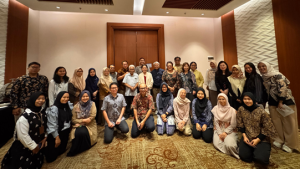
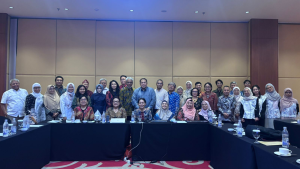
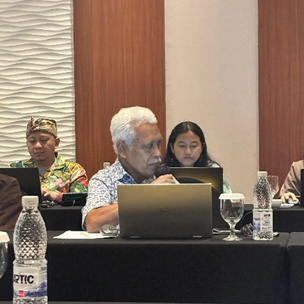
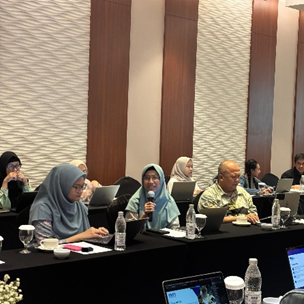
In this context, the Indonesian Nutrition Foundation for Food Fortification (KFI) conducted a study to identify and analyze gaps in industry compliance with mandatory food fortification policies, as well as to trace and assess the availability of LSFF implementation data. The study was carried out through a series of activities, including literature and regulatory reviews, enriched by workshops. Based on the mapping and gap analysis, the data and monitoring system for mandatory food fortification in Indonesia faces two main challenges: (a) limited availability of up-to-date and representative data, and(b) low quality and weak integration of cross-institutional data. These conditions constrain the country’s ability to accurately assess program coverage, implementation quality, and nutritional impact of LSFF. Data fragmentation across agencies also prevents a comprehensive understanding of the relationship between fortified food consumption, industry compliance, and changes in population micronutrient status.
Strengthening systems for monitoring product quality and industry compliance should be a national priority. This can be achieved through routine reporting and digitalization of industry data, covering production volume, product types, fortificant levels, and laboratory test results. Additionally, an integrated platform developed by regulatory bodies could consolidate quality monitoring data from factory and market levels in near real-time. More broadly, fragmentation among institutions highlights the need for an Integrated LSFF Monitoring System linking production, distribution, quality control, consumption, and nutritional biomarkers within a standardized and sustainable coordination framework. This system should be supported by national LSFF indicator guidelines and integrated into Indonesia’s “One Data” policy in the food and nutrition sector. Strengthening laboratory capacity and expanding laboratory networks—including regular proficiency testing—is also essential to ensure consistency and credibility of results across regions. With these improvements, Indonesia is expected to be able to develop a more integrated, adaptive, and reliable LSFF monitoring system as an evidence base for assessing the effectiveness of mandatory food fortification in improving population micronutrient status and supporting the achievement of national nutrition development targets.
The analysis shows that although Indonesia already has a relatively strong legal framework for three mandatory fortified commodities—iodized salt, wheat flour, and palm cooking oil—industry compliance levels still vary across commodities and business groups. This variation is mainly influenced by capacity gaps between large industries and micro and small enterprises, limited laboratory and certification facilities, and suboptimal inter-agency coordination within the monitoring system. This condition indicates that the existence of regulations alone is not sufficient to ensure compliance; therefore, more targeted and responsive implementation strengthening is required, tailored to the characteristics of each commodity.
For salt, policy priorities should focus on strengthening technical support, providing incentives, and facilitating certification for micro and small enterprises. These measures include enhancing the technical capacity of producers in iodized salt production processes in accordance with SNI standards, subsidizing laboratory testing costs, facilitating SPPT SNI certification, and strengthening region-based industrial development through collaboration with local governments. Routine supervision by local governments of producers and traders also needs to be strengthened to ensure that salt circulating in the market meets the required iodine standards. This recommendation is important given that compliance in salt fortification remains relatively low, with only 89 percent of samples meeting KIO₃ levels, while non-compliance is most prevalent among micro and small enterprises due to limitations in cost, technology, and workforce technical capacity. Experiences in several regions also show that the implementation of local regulations on iodized salt distribution can improve the performance of local business units.
Pada fortifikasi tepung terigu, tingkat kepatuhan industri pada dasarnya sudah tinggi, yaitu berkisar 89 hingga 100 persen, namun masih diperlukan penguatan pada aspek transparansi dan evaluasi dampak. Dalam hal ini, LSPro dan Kementerian Perindustrian perlu mewajibkan publikasi berkala mengenai daftar industri bersertifikat SNI dan hasil audit tahunan untuk meningkatkan akuntabilitas publik, transparansi sistem, dan kepercayaan konsumen. Selain itu, pemerintah perlu mendorong pelaksanaan kajian efektivitas fortifikasi tepung terigu, baik oleh lembaga riset pemerintah maupun lembaga independen yang ditunjuk secara resmi, untuk menilai dampak program terhadap kesehatan masyarakat melalui biomarker seperti hemoglobin dan ferritin. Kajian semacam ini penting tidak hanya untuk menilai dampak gizi, tetapi juga untuk menyediakan indikator tidak langsung mengenai mutu implementasi dan kepatuhan industri.
In wheat flour fortification, industry compliance is generally high, ranging from 89 to 100 percent; however, further strengthening is still needed in terms of transparency and impact evaluation. In this regard, certification bodies (LSPro) and the Ministry of Industry need to mandate regular publication of lists of SNI-certified industries and annual audit results to enhance public accountability, system transparency, and consumer trust. In addition, the government needs to encourage effectiveness studies on wheat flour fortification, conducted either by government research institutions or officially appointed independent bodies, to assess program impacts on public health through biomarkers such as hemoglobin and ferritin. Such studies are important not only for evaluating nutritional impact but also for providing indirect indicators of implementation quality and industry compliance. Meanwhile, for palm cooking oil, strengthening laboratory systems and adopting a risk-based audit approach are key priorities. The government needs to designate a national reference laboratory for vitamin A testing and expand the network of regionally accredited laboratories, particularly outside Java and in eastern Indonesia. These efforts should be accompanied by regular proficiency testing to ensure that inter-laboratory results remain consistent, accurate, and comparable. In addition, risk-based audit and certification approaches should be implemented, prioritizing non-compliant industries. This recommendation is relevant given that limited vitamin A testing facilities in regions have caused delays in certification and monitoring, while surveillance results indicate that around 19 percent of samples at production facilities do not meet the minimum level of 45 IU/g. Other data also show that out of 468 production facilities, 27 percent do not meet Good Manufacturing Practices (CPPOB), and 13 percent have vitamin A levels below 20 IU/g. Therefore, a risk-based audit approach would improve both efficiency and targeting of supervision.
RECOMMENDATIONS
In addition to commodity-specific recommendations, cross-commodity systemic reforms are also required to strengthen the governance of mandatory food fortification at the national level. One key step is the development of an integrated digital system that consolidates certification data, laboratory test results, and regulatory oversight, allowing information that is currently dispersed across institutions to be unified within a national monitoring system. Furthermore, the SNI revision cycle should be harmonized with national nutrition surveys—for example, every five years—so that fortificant levels can be adjusted to evolving population nutritional needs. Strengthening the capacity of local governments and salt producer associations (PPSI) is also essential, particularly through improving technical capabilities, providing simple testing tools, and developing local reporting systems to support small and medium enterprise development. Moreover, strategic partnerships with international development organizations such as GAIN, UNICEF, FAO, and WFP should be expanded to support laboratory strengthening, reporting systems, and fortificant supply. Overall, these recommendations emphasize that strengthening LSFF in Indonesia requires not only a regulatory approach but also strong institutional capacity, quality infrastructure, data transparency, and sustained cross-sectoral coordination.
PENUTUP
Although Indonesia has strong food fortification regulations, these alone are not sufficient to ensure effective implementation of fortification programs. The main challenges include data gaps, weak coordination across ministries/agencies and stakeholders, and varying levels of compliance across industries. With an integrated monitoring system, stronger regional capacity, improved transparency, support from international and development partners, and a strengthened role of the National Food Fortification Coordination Forum (FKFPN), these efforts can serve as effective instruments in addressing micronutrient deficiencies in Indonesia. The recommendations have been outlined above. The following are key priority actions that need to be further strengthened moving forward as part of the follow-up:
- Development of an Integrated Data System: an Integrated LSFF Monitoring System covering production, distribution, consumption, and micronutrient biomarkers
- Harmonization and consistency in the implementation of national nutrition and health surveys (SKMI, SKI, and SUSENAS), along with the development of integrated indicators
- Strengthening laboratory networks and conducting regular proficiency testing
- Enhancing public transparency through effectiveness studies of food fortification programs to demonstrate their benefits and health impacts
- Strengthening partnerships with development partners to support program implementation, including information system development, laboratory strengthening, program effectiveness evaluation, and dissemination, advocacy, socialization, and education
[1] Peraturan Presiden Republik Indonesia Nomor 12 Tahun 2025 tentang Rencana Pembangunan Jangka Menengah Nasional Tahun 2025-2029. Jakarta: Sekretariat Negara Republik Indonesia.
[2] Kementerian PPN/Bappenas dan UNICEF. (Maret 2024). Kajian Lanskap Fortifikasi Pangan Berskala Besar di Indonesia: Identifikasi kesenjangan dan tantangan dalam implementasi FPBB di Indonesia. UNICEF Indonesia / Bappenas